Summer in the Alpine: Slowing Down on the Mountain
Summer opens the high country for a few short months. Snow recedes, the meadows thaw, and the alpine comes alive in ways that are easy to miss if you are moving too fast. Most people are moving too fast.
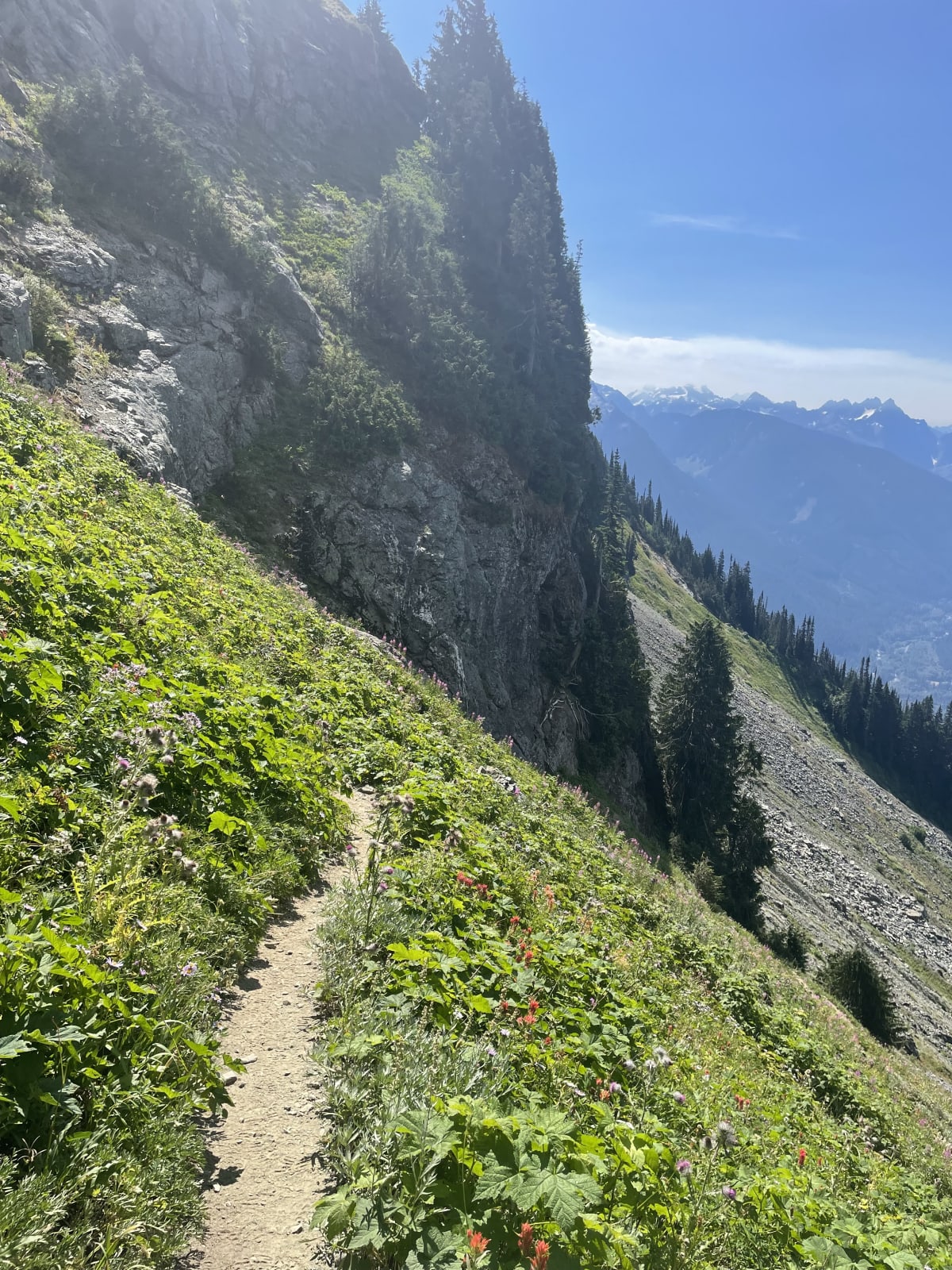
Slow Down
The instinct on a trail is to cover distance. To summit. To get somewhere. That instinct is worth questioning in the alpine.
Above treeline, everything moves on its own schedule. Marmots sun themselves on the same rocks every morning. Pikas call from the talus. The light changes every hour. A field of lupine that looked purple at noon turns silver by late afternoon. None of this is visible if you are hiking with your head down, grinding miles.
Stop more than you think you need to. Sit on a rock and watch the ridgeline for ten minutes. Eat your lunch slowly. The mountain is not going anywhere.
Mountain Safety
Summer in the alpine is forgiving compared to winter, but it has its own hazards.
Weather moves fast. A blue-sky morning can produce afternoon thunderstorms with very little warning. Start early, be off exposed ridges by noon if storms are possible, and take lightning seriously above treeline. There is no shelter up there.
Snow persists into summer. North-facing slopes and couloirs hold snow well into July and sometimes August. A microspike or traction device in your pack weighs almost nothing and can save you from a serious slide on a slope that looked passable from below.
Know your bailout. Before you leave the trailhead, know what you will do if the weather turns or someone gets hurt. Where is the nearest road? How long does it take to get back? Have a plan that does not depend on cell signal, because you probably won't have any.
Tell someone where you are going and when you expect to be back. This is the single most important safety habit and also the easiest one to skip.
Leave No Trace
The alpine ecosystem is one of the most fragile environments you can walk through. It survives at the edge of what plants and animals can tolerate — thin soil, short growing seasons, extreme weather. What grows up here does not recover quickly from being damaged.
Stay on trail. A social trail that cuts a switchback might save you sixty seconds and causes erosion that lasts years. The established trail exists for a reason.
Camp on durable surfaces. Rock, gravel, and dry grass. Not on vegetation if you can avoid it. In designated wilderness areas, camp at least 200 feet from lakes and streams.
Pack everything out. Everything. Fruit peels, nut shells, and orange rinds do not decompose quickly at elevation. If you carried it in, carry it out.
Human waste. Cat holes, six inches deep, 200 feet from water, trails, and campsites. Or use a WAG bag where required — an increasing number of popular alpine areas now require them.
The Flowers
This one matters more than it sounds.
Alpine wildflowers have an extraordinarily short window. Indian paintbrush, alpine phlox, blue columbine, avalanche lily — these plants spend most of the year under snow. When summer comes, they have a few weeks to bloom, get pollinated, and set seed before the season closes again. Some individual flowers may only fully open for a few days.
Stepping on them — even once, even accidentally — is not a small thing. It takes years, sometimes decades, for alpine vegetation to recover from foot traffic damage. A boot print in a wildflower meadow is not gone the following spring.
This is why the trail exists. Walk on it.
When you stop to rest near a meadow, find a rock or a patch of exposed gravel. Take the photo from the edge. Appreciate from a distance. The flowers are not there for decoration — they are doing the most important work of their very short year.
What You Take With You
A summer day in the alpine asks almost nothing of you. It gives back something hard to name — the kind of quiet and scale that puts things in perspective. That is worth protecting.
Move slowly. Watch the weather. Leave it exactly as you found it. Come back next year and it will still be there.